Cattle are good for the soul. And for the planet!

By far the most exciting thing about 2020 has been the arrival of cattle back on the farm.

Why would we, as eco aware farmers, be doing something like this? Aren’t we aware of the vegan lobby and the increasing trend towards plant based diets, and the supposed environmental effects of red meat consumption?

Yes of course.

But if we care about people and about the land we love, we should be more aware of health than of spurious ‘scientific’ agendas often driven by disconnected ideologies.

Growing crops in perpetuity in conjunction with the necessarily high levels of chemical biocides and fertilisers does not promote health.

We know this because we sense it, we smell it, we touch it, we taste it. Not because of spurious science.

In fact I and numerous other farmers would refuse to eat their own produce under these kind of systems, which would be widely promoted by those who, with calculator in hand, would seek to show us all the environmental problems associated with eating red meat.
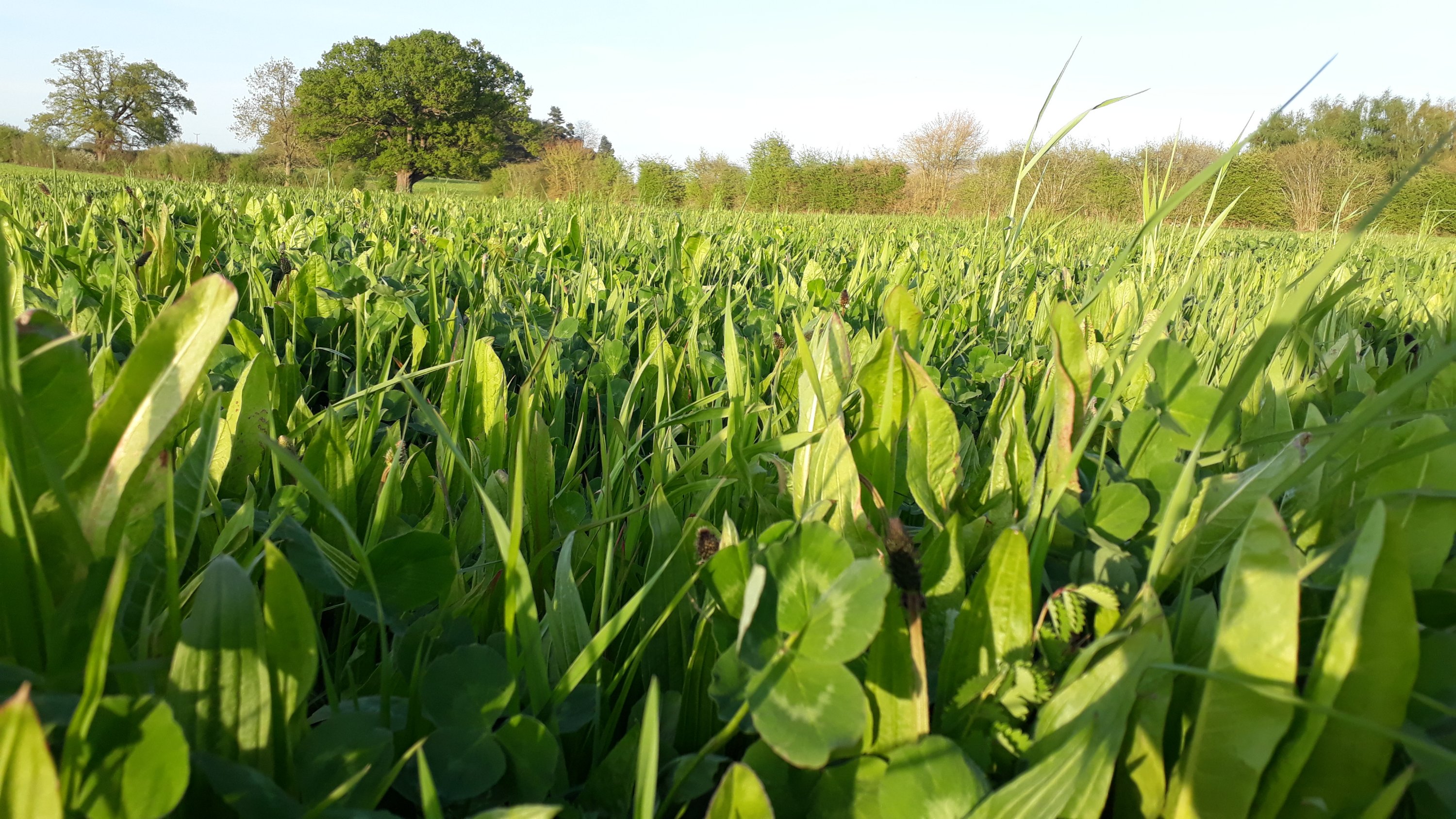
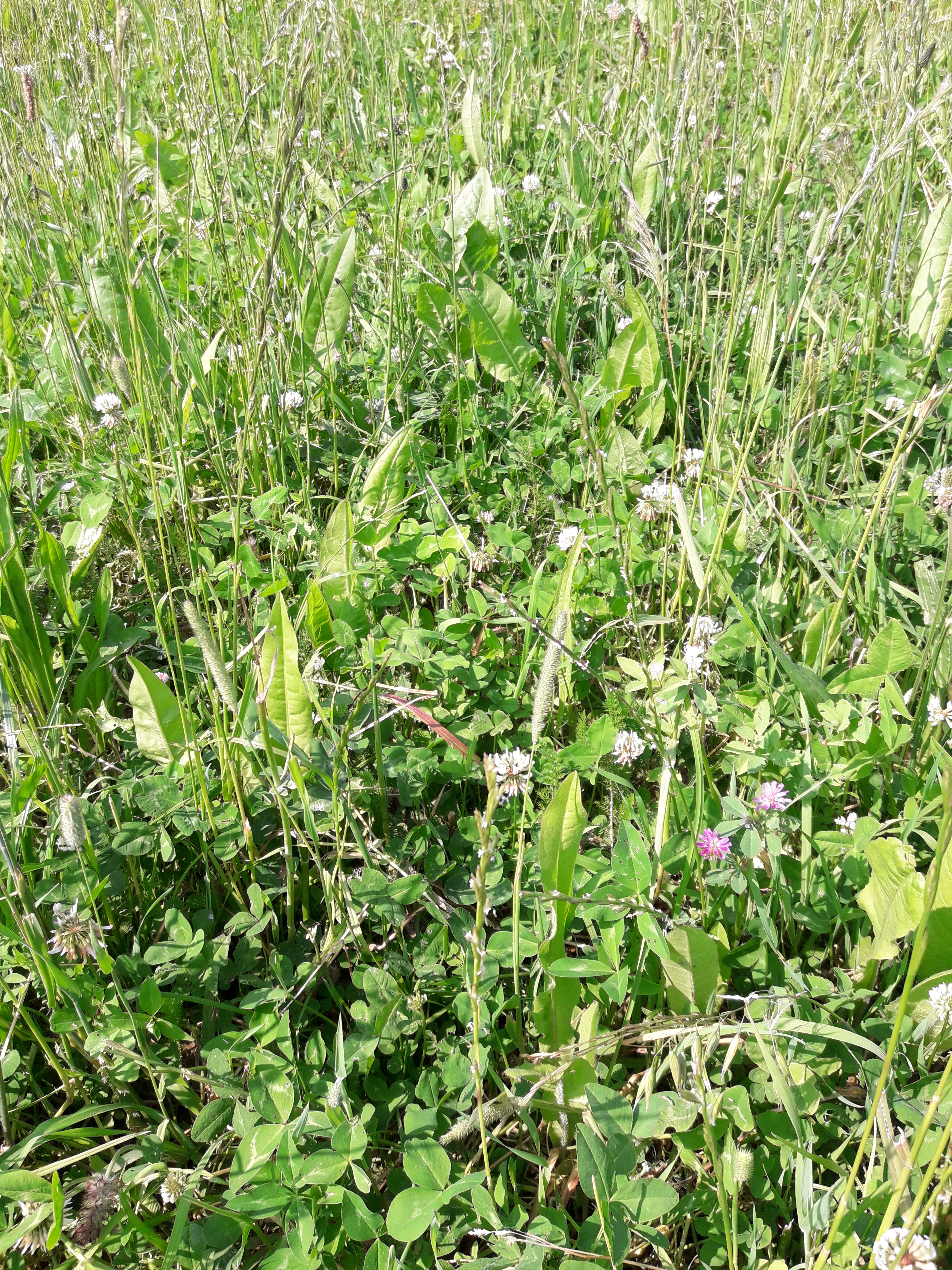
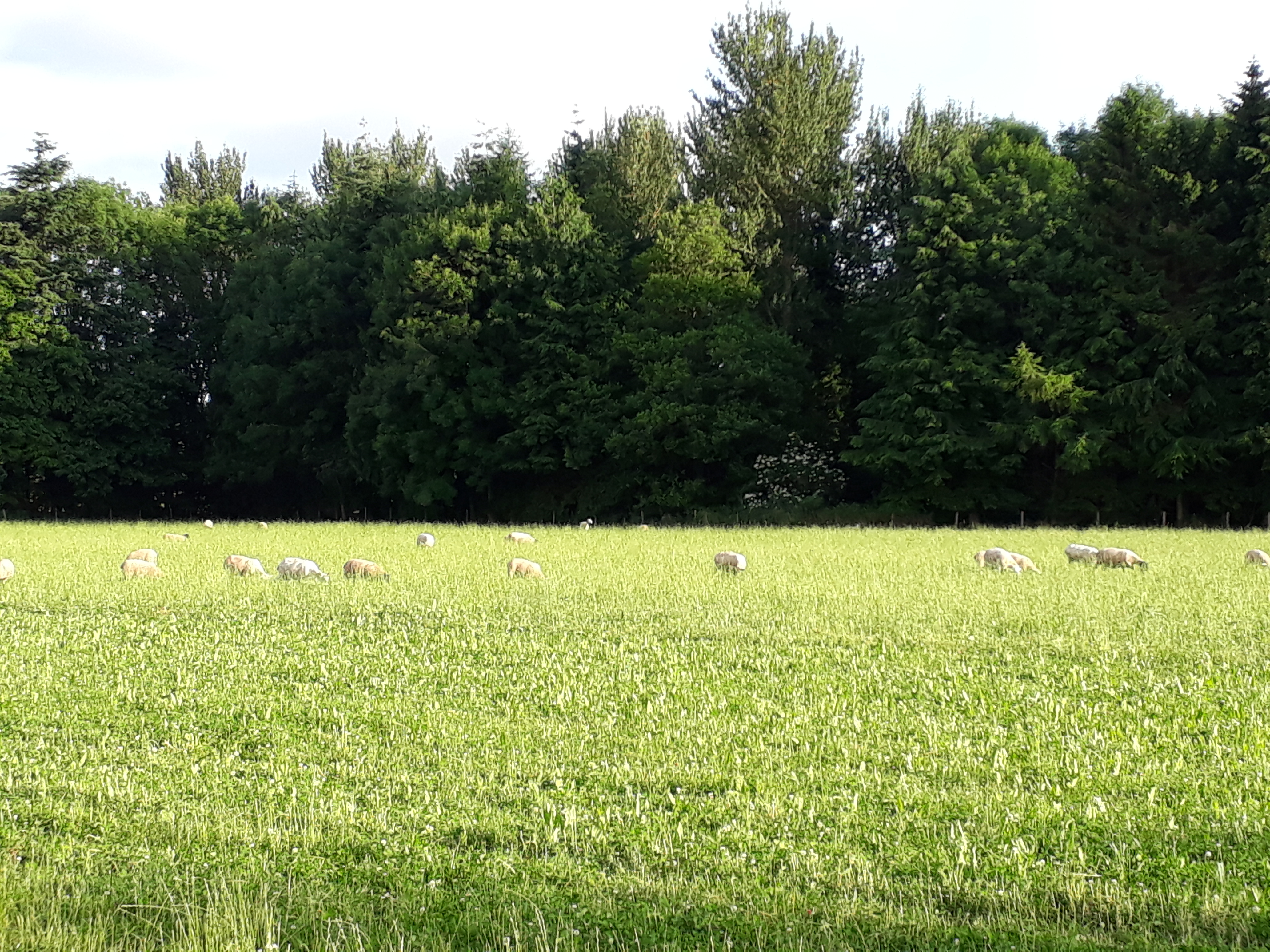
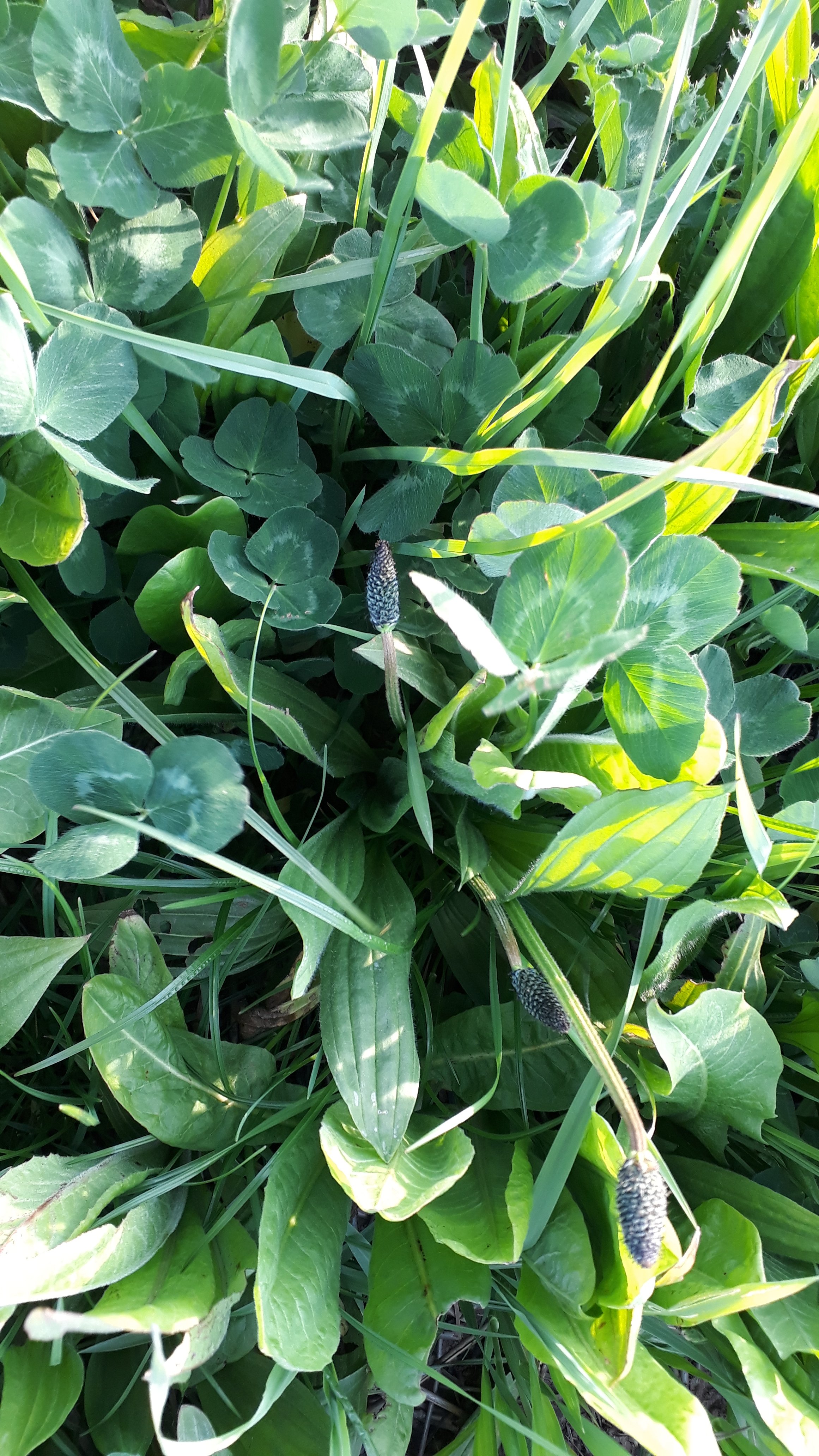
But have a look at this beautiful and diverse mixture of nutritious plants, grown without any chemicals, building soil organic matter and sequestering carbon. It is sucking Nitrogen out of the air to provide the fertility for the next crop, not shipping it in from a factory. It is full of insect life and overhead the swallows and martins are swooping down for a feast in mid air.
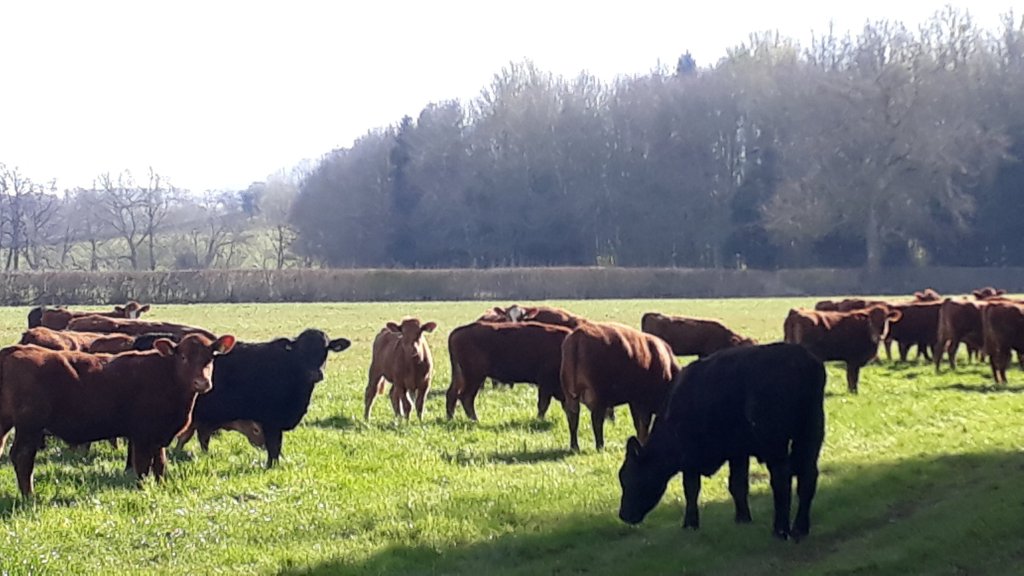
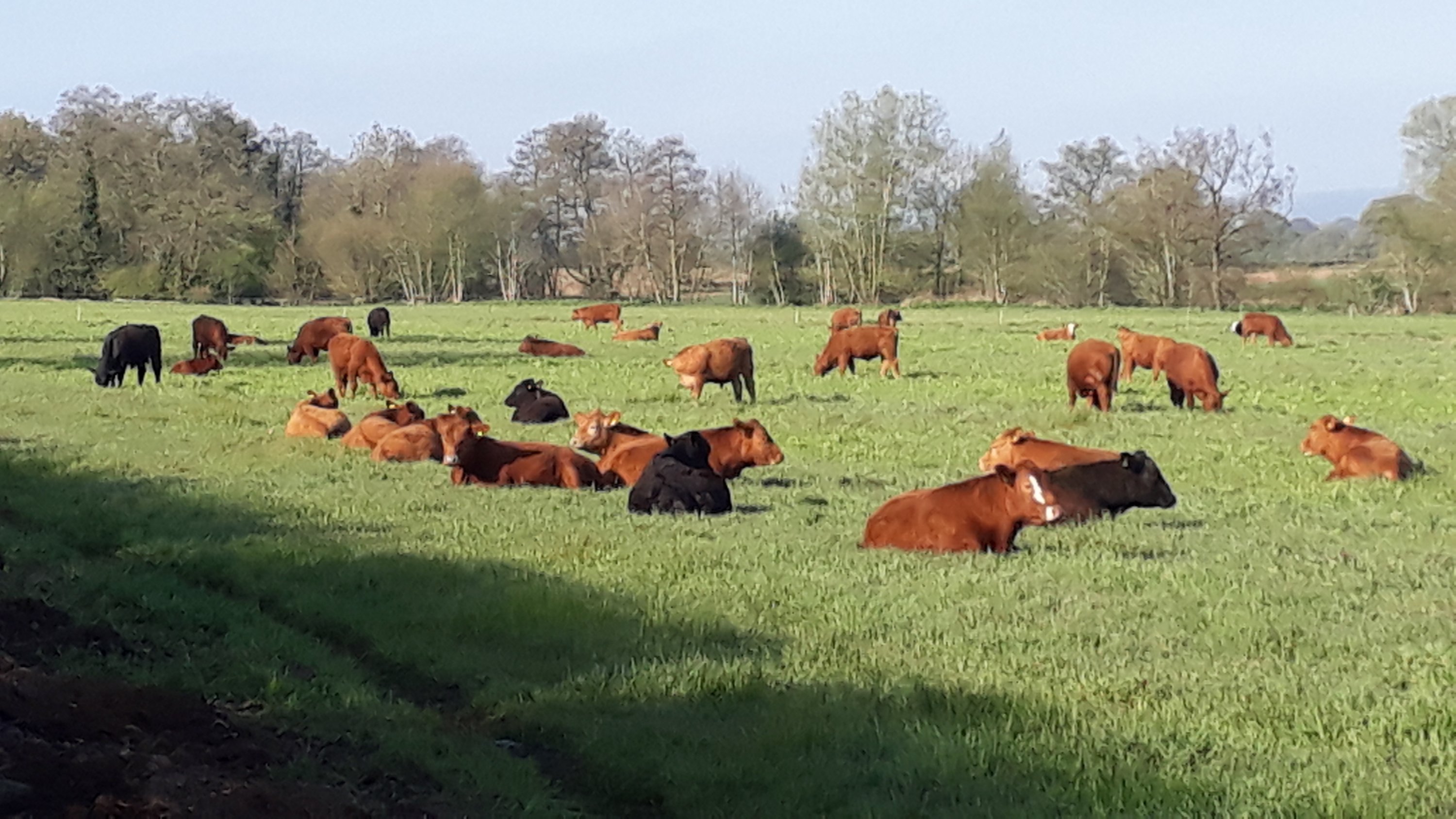
It is about to be grazed by these beautiful animals in their prime, full of health, sleek and shining in the evening sun, worshipping their creator as they frolick and race around the field with their tails in the air. Tell me you don’t want a mouthful?!!
The alternative is a mouthful of nutritionally deficient tofu, produced from soya on an ecologically sterile American prairie, leaching chemical fertilisers into the waterways and decimating river and marine life, seasoned by pesticide residues and washed down by a vitamin pill. Which would you prefer?

And which system really provides health for people and ecosystems?

And finally, why are cattle good for the soul…?

Psalm 65 says it beautifully – the crops and the livestock are shouting for joy and singing to their creator. They point us towards Him.

The whole earth is filled with awe at your wonders; where morning dawns, where evening fades, you call forth songs of joy.

You care for the land and water it; you enrich it abundantly.

The streams of God are filled with water to provide the people with grain, for so you have ordained it.

You drench its furrows and level its ridges; you soften it with showers and bless its crops.

You crown the year with your bounty, and your carts overflow with abundance. The grasslands of the wilderness overflow; the hills are clothed with gladness.

The meadows are covered with flocks and the valleys are mantled with grain; they shout for joy and sing.
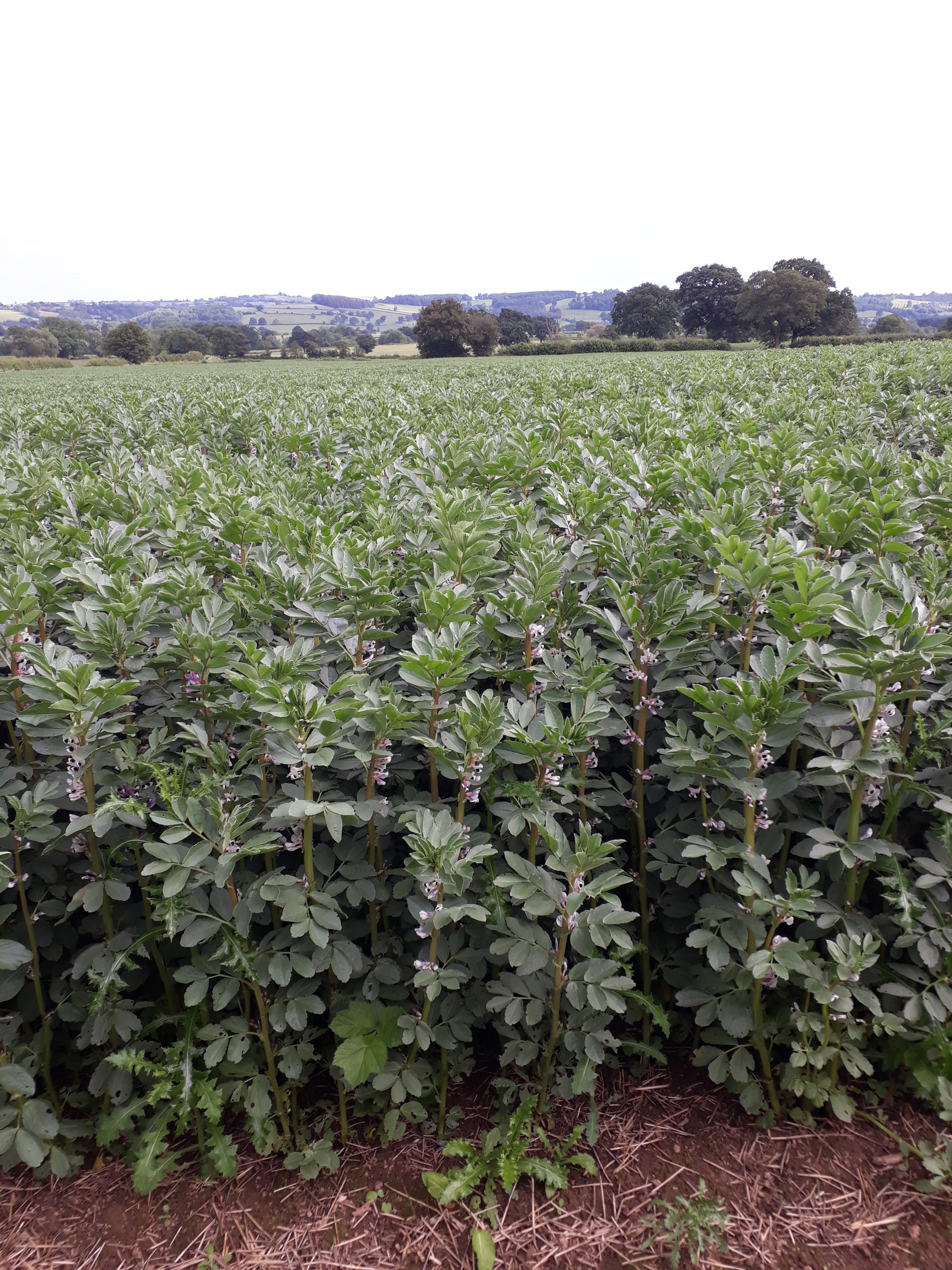
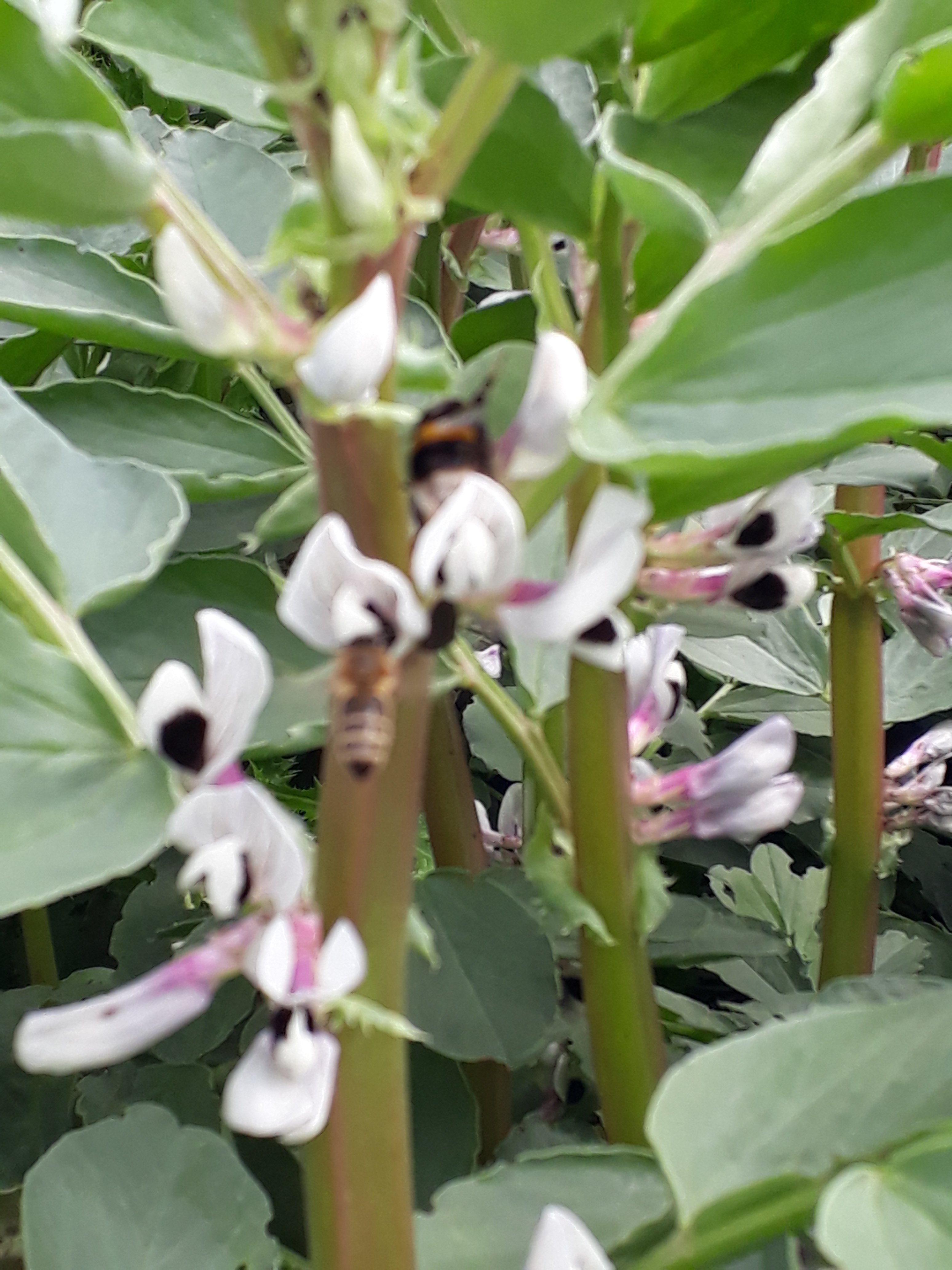
A buzzing field

If you saw my post in February, these are the beans me and my daughter Annabel planted, directly into the soil back then, with no cultivations….. they look great!

As I walk into the field I have never heard such a loud buzzing noise, with many different species of bee pollinating the beans, and thousands of them.

I am thankful that we have have made a policy decision to stop using all insecticides 3 years ago, with no detriment to our crop yields and with many benefits to the soil food ecosystem.

This fuzzy photo shows 2 different bee species pollinating the same plant.

It is almost impossibly beautiful, and what a privilege to work with our Creator. We do a tiny bit he does the rest.

Organic vs no-till

Perhaps you remember the experiment that I wrote about earlier in the year? (See post below entitled “experiments”)

Now that the spring has sprung and the crops (and the weeds!!) Are growing, I have been watching the two halves of the field with baited breath.

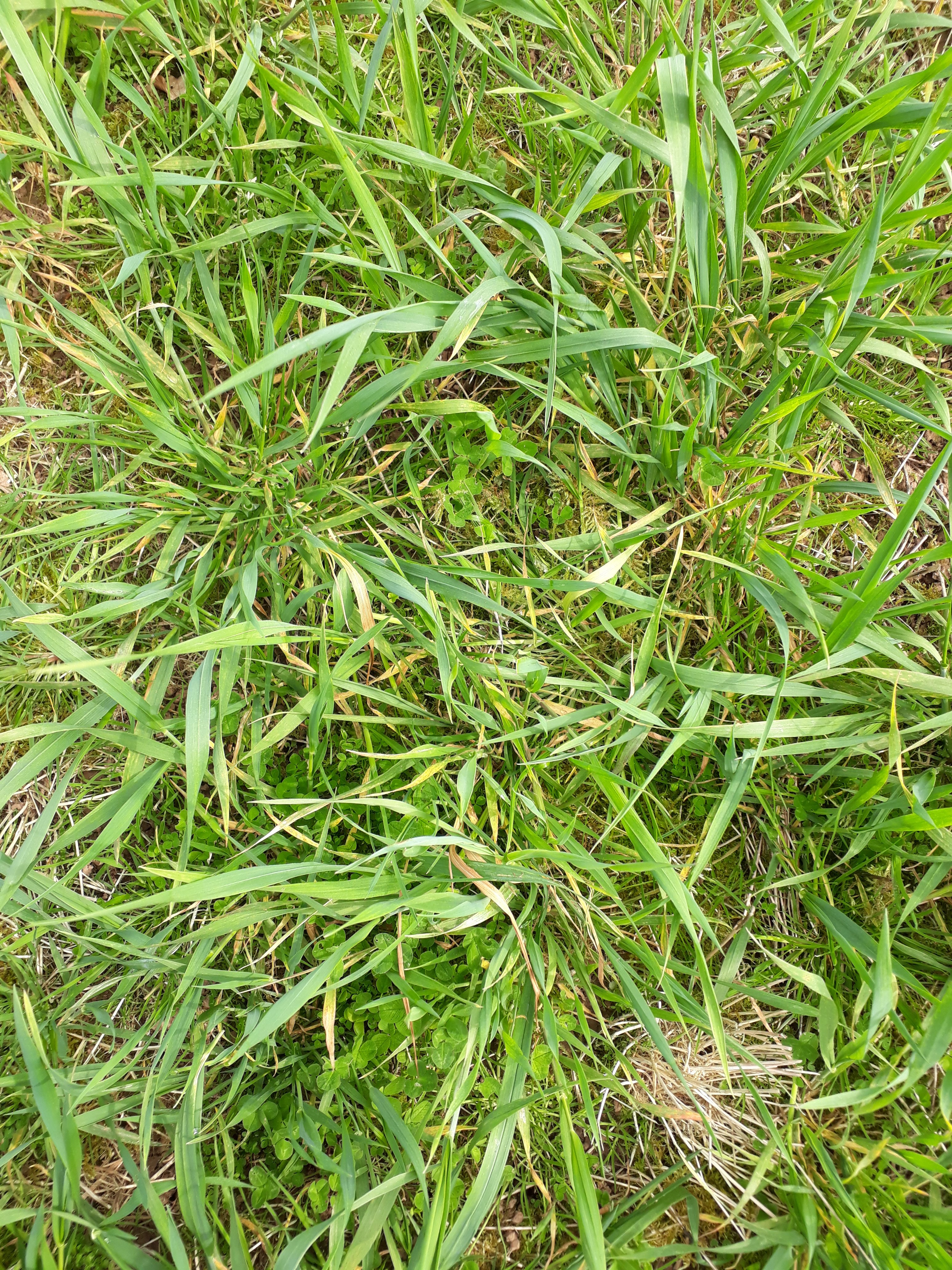
No till, below……

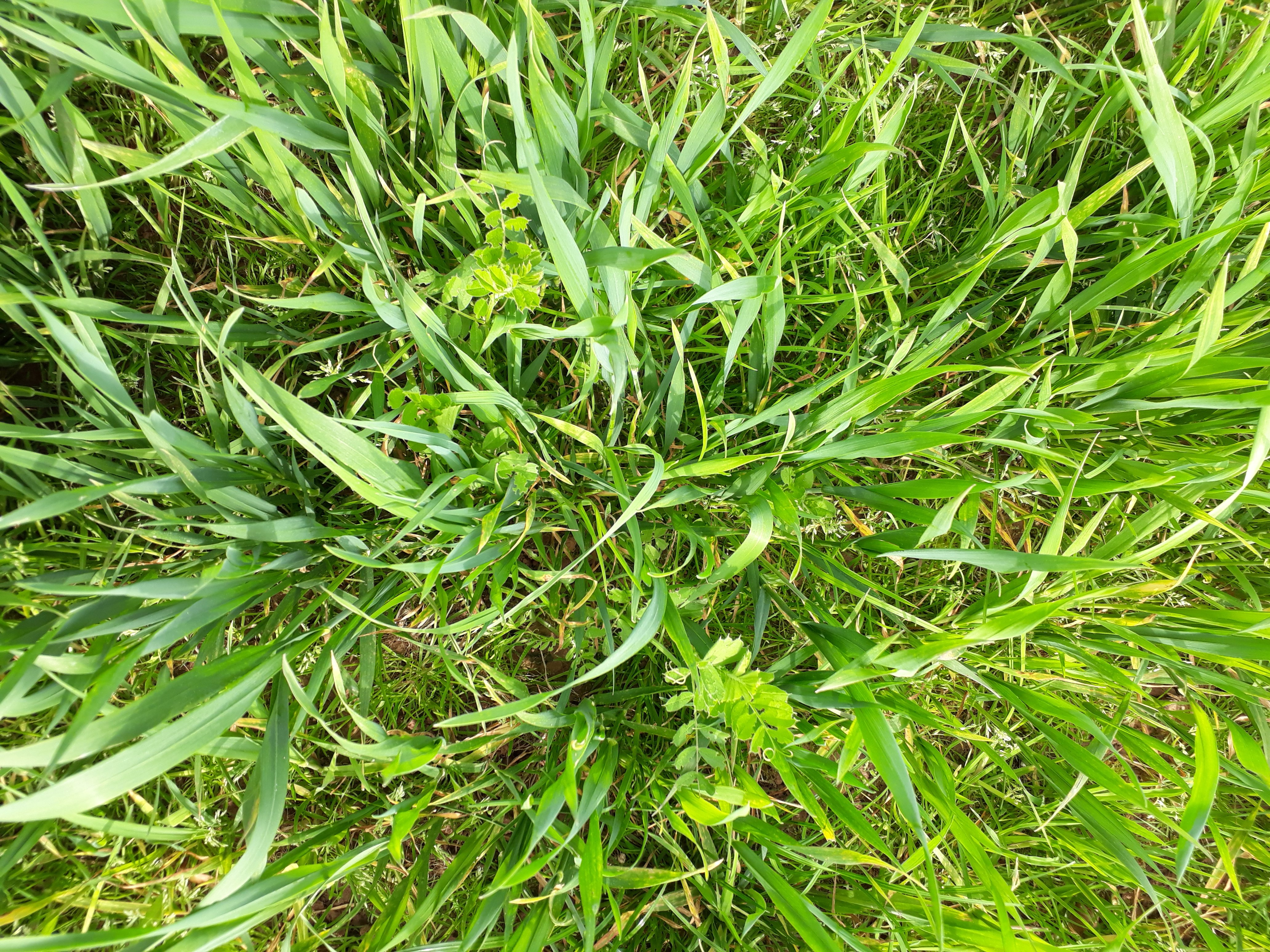
Organic below…….

You may say – it’s all green stuff, what’s the difference? I would say that the organic plants have established better, are thicker and healthier but have more weed present.

The no-till plants are thinner, less green and lush, have less weed, but have more clover present as the glyphosate used in the autumn to destroy the pasture does not kill clover very well. This could be seen as a bonus as the clover will sit under the crop canopy, fix nitrogen, and feed the crop as it grows.

But all in all, at this stage of the growing season I would place my bets on the Organic half of the field in terms of its yield potential.

Which is a good thing because we are planning to start our organic conversion in September of this year!

Lazy farming

This past week we have been planting fava beans. They are an amazing source of UK grown veggie protein. But sadly they are not part of the national repertoire of foods so they tend to get exported to the middle East where they love them!

We are now doing more and more no-tillage farming. Instead of pulverizing the soil with heavy machinery until it becomes fine and crumbly, we are relying on earthworms and roots to do this for us.

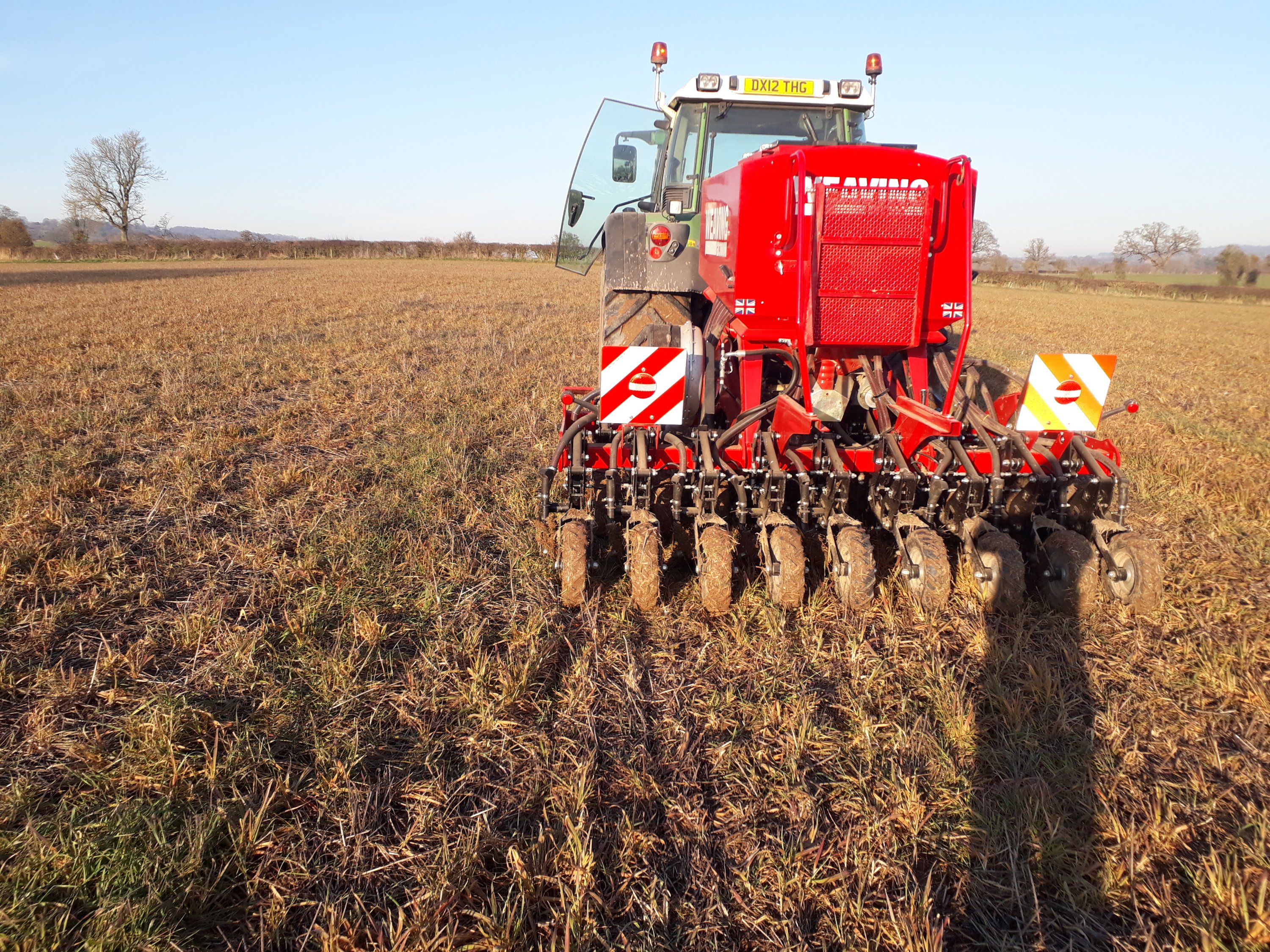
In this case planting beans using a special ‘no till’ seed drill, which cuts through the dense residue of a previous crop and plants the bean seeds directly into the soil below, closing the slot immediately afterwards with the little wheels at the back of the drill.

The drill is ultra low soil disturbance. The photo shows the before and after and while the foliage is slightly compressed, the soil is almost untouched.

This method improves soil health, water holding capacity, nutrient cycling, carbon sequestration and much more. Yields on our farm have not decreased using this method.

It has also reduced our diesel consumption from around 55 litres per hectare for establishing a crop to just 8 litres per hectare?

What’s not to like? Really not a lot. But it will be more of a challenge when we convert to organic production, when we will rely on mechanical methods to destroy weeds instead of chemical methods.

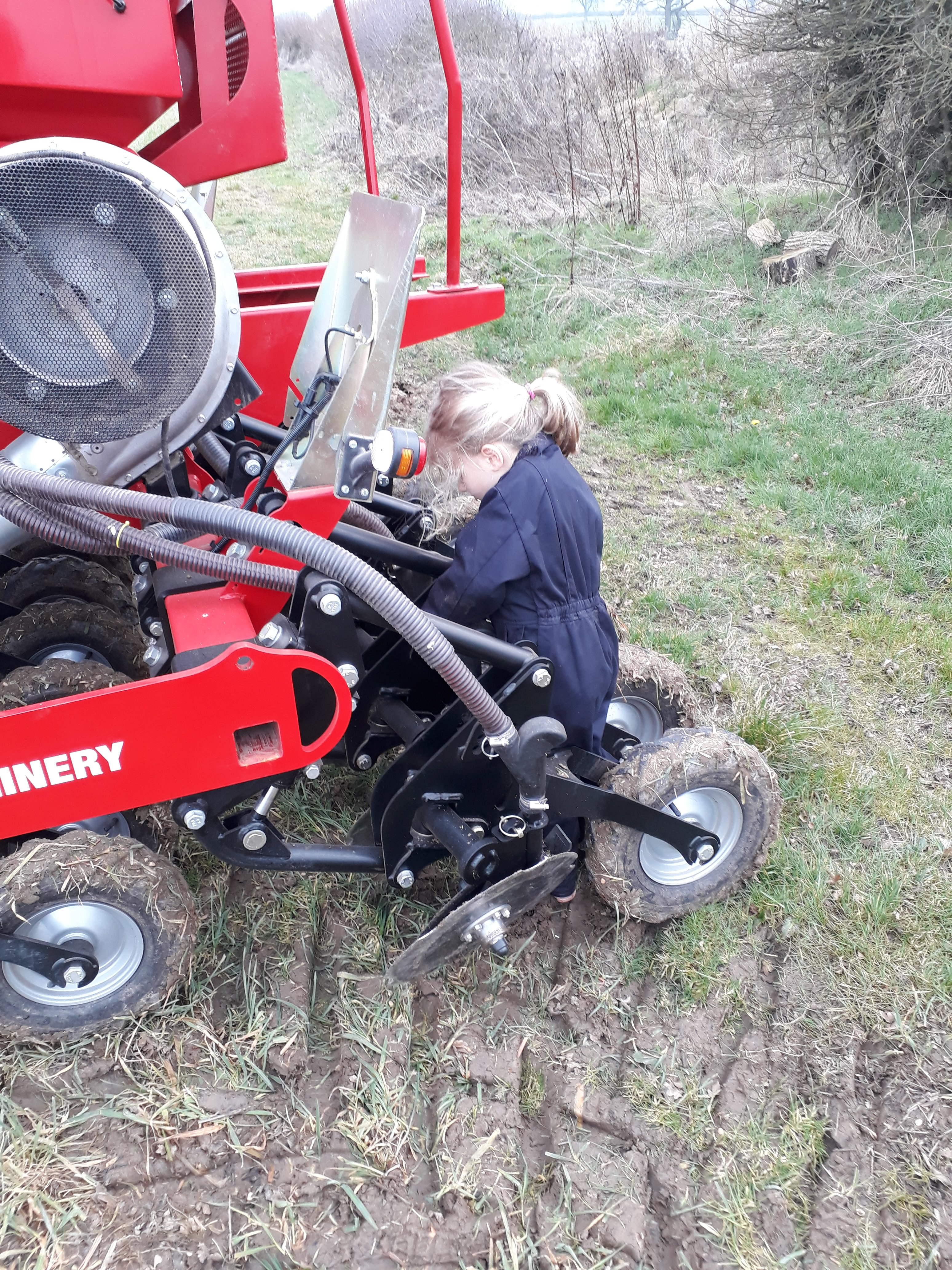
But it gives us lots more time and now Annabel can spend as long as she likes changing the depth settings on the drill because we aren’t in a rush! And I have more time with the family.

I see this as trying to work with and learn from God’s creation instead of against it. It does need a ‘renewing of the mind’, an unlearning followed by a relearning.

“But ask the animals, and they will teach you, or the birds in the sky, and they will tell you; or speak to the earth, and it will teach you, or let the fish in the sea inform you. Which of all these does not know that the hand of the Lord has done this?”
Job 12:7‭-‬9

Experiments

Everything I do on the farm is an experiment. Everything I do aims to improve the health of the soil. Experiments are my signposts.

One big question I would like to answer is this: We all know that tillage is detrimental to soil health. We all know that herbicides are detrimental to soil health. But which is the most detrimental?

I am doing a field experiment to try to work this out. It looks like this….

Autumn 2016: plant a multi species perennial herbal ley incorporating grasses clovers and herbs with the goal of increasing organic matter and the natural fertility of the soil. By summer 2017 it looks like this:

And smells equally beautiful. It is grazed (not quite mob grazed, but grazed at high intensity, with long breaks) by sheep on and off for 2 years.

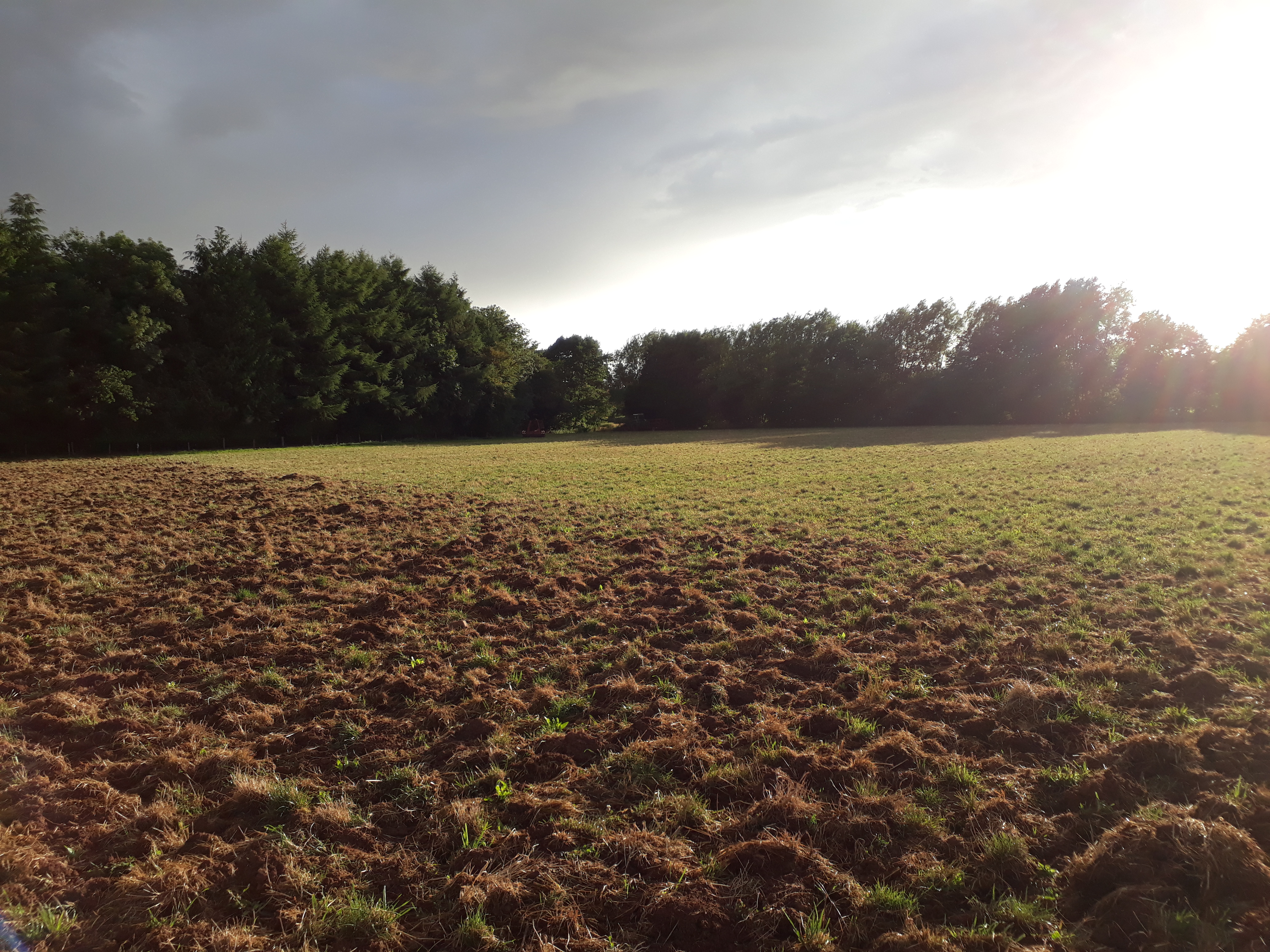
In autumn 2018 half of the ley (the nearer half in the photo below) is destroyed by 4-5 passes of very shallow tillage, and half is destroyed by a single application of glyphosate. See below.

What! – all that diesel to do 4-5 passes of cultivation! And you can do a better job from one application of glyphosate!……. But……

Don’t draw your conclusions too quickly – glyphosate has an energy of manufacture (and CO2 footprint approx) equivalent to 15-20 litres of diesel, from memory. So in fact the CO2 and energy equation is pretty similar for both methods (perhaps someone who knows more about this would like to verify it?)

Next we used a double disc coulter direct drill (almost alliteration!) to drill both halves of the field at the same seed rate at the same time.

We drilled a population of old and new wheat varieties and crosses called Wakelyns YQ. “Populations are genetically diverse. All plants are genetically distinct while all of those in standard pureline varieties are almost identical. Populations are better able to adapt to unpredictable environments, including weather and pest/disease pressures.”

http://www.organicresearchcentre.com/?i=articles.php&art_id=783&go=Information%20and%20publications

In hindsight, it was planted too late, and the plant population too low, but we do have a smattering of plants in both halves of the field and one can see up the rows. Photos to follow as the season progresses……..

Why am I writing a blog?

Why am I writing a blog?

I am a farmer. I am in pursuit of the health of body, mind, soul and spirit.

I am not alone when I state that we need to pursue the health of body and mind and of spirit. We need to steward the land that God has given us which in turn will nourish and bring peace to the people that eat and engage with the food we produce.

But farming nowadays is not the communal  vocation it once was. 100 years ago our small farm would have perhaps employed half a dozen men at a guess. Now it can barely justify one part-time employee. So it is hard to share knowledge on a day to day basis with people who have the same goals.

Add to this the fact that knowledge of local or landrace varieties of plants, animal breeds and production methods have been substituted by ‘scientific’ and formulaic approaches to food production, which removes the need for farmers to share in the way that they may have done in the past.

The result is that we are producing a fragmented and disconnected rural community,  and we are producing plants and animals that, being unhealthy in themselves, are resulting in poor health in the human beings that eat them. And farmers are stuck on large islands of land, often making so little profit that they are too busy to engage with these wider issues.

Can a blog solve this? No. Perhaps it is a first step though.